 By
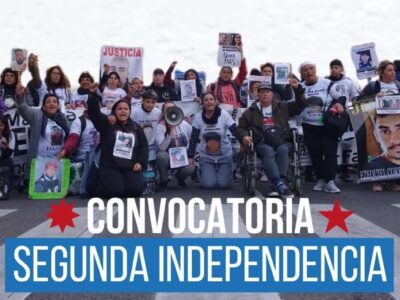
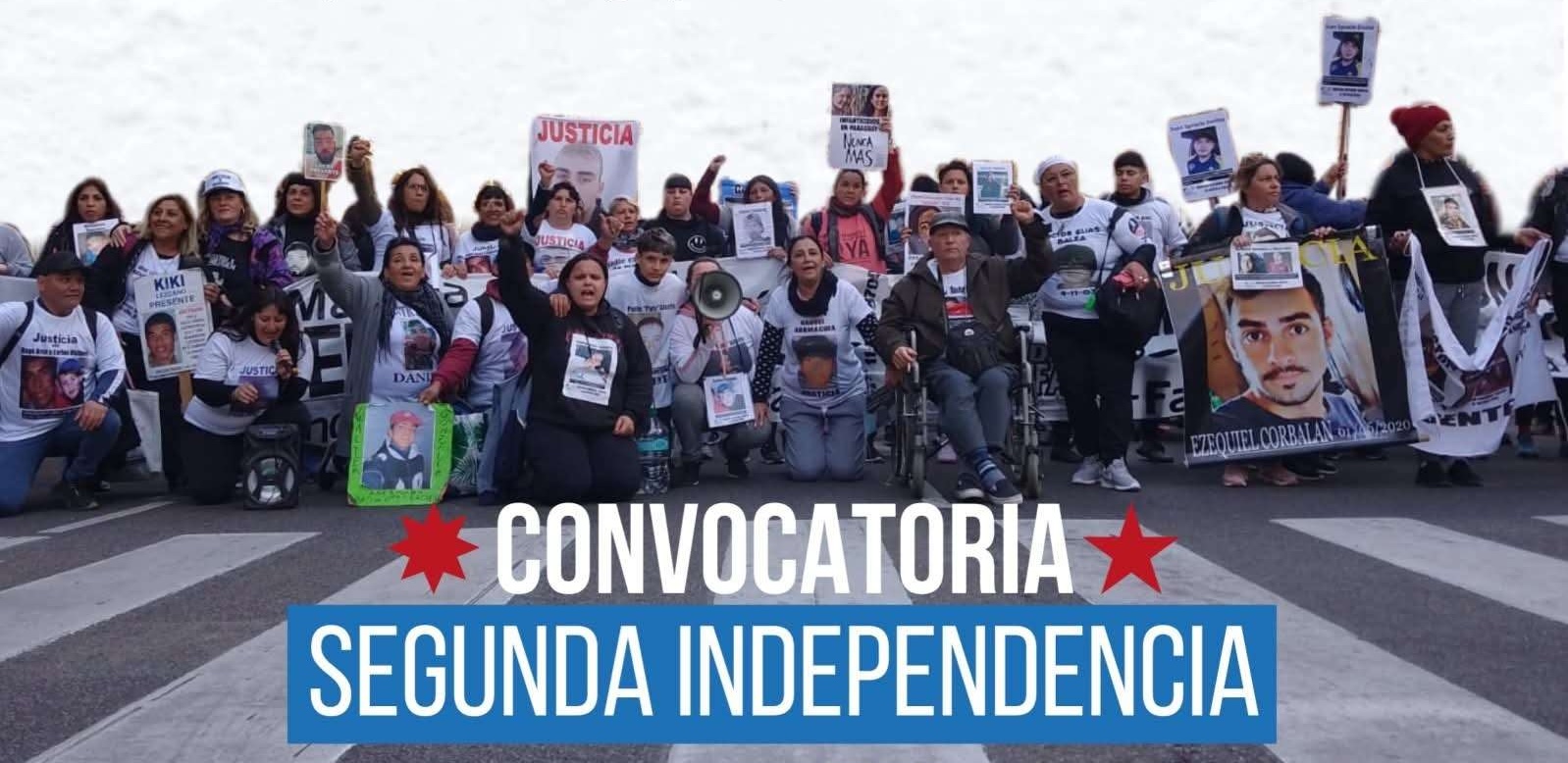
By We spoke with Eduardo “El Negro” Soares, a militant of the organization Second Independence Call and President of the solidarity association Gremial de Abogados y Abogadas de Argentina, shortly after the revalidation at the polls of the turbo-liberal experiment in the country as part of a new attempt to consolidate imperialism. We try to understand the advances and setbacks of the revolutionary process in Argentina and other parts of the region with a veteran communist and internationalist militant who continues the fight through these two organizations.
He speaks to us about the historical development of revolutionary struggles in the country, about Peronism, about the various resistances that have occurred and are occurring to end dependency, plunder, and imperialist domination in Argentina and the region.
Finally, ‘El Negro’ reviews the savage and inhumane repression faced by the revolutionary movement in Paraguay.
Interview conducted by Joanet, and transcribed, edited, and translated by Jessenia Jazmin.
Interviewer: Greetings, comrades. Greetings from the Anti-Imperialist Network. And on this occasion, from the Committee of Solidarity with Latin America, we have Eduardo Soares, better known as ‘El Negro’ Soares. ‘El Negro’ Soares is a historic Argentine militant. He is the President of the Gremial de Abogados de Argentina and a militant of the organization Second Independence Call.
Well, comrade, greetings, introduce yourself a bit if you like.
‘El Negro’ Soares: A greeting, a hug. I am Eduardo Soares, everyone calls me ‘El Negro’ Soares, from Argentina. I am president of the Gremial Association of Lawyers of Argentina and I am also a militant of the organization Second Independence Call. I am 74 years old, I started militating from a very young age, almost a teenager. I was a militant in the armed organization Montoneros. I was detained, I was a political prisoner for many years and when the dictatorship ended I regained my freedom and continued militating.
And today I am the founder and part of these two organizations. One is a solidarity organization, La Gremial de Abogados, and the other is a political organization. I have never stopped militating since I started, including the hard years of the military dictatorship and the no less hard years before the military coup where the organization I was part of had more than a thousand dead in that war. Before the military coup, during the Peronist government.
I am a Marxist-Leninist and the organization I belong to is as well. That is, we have the class struggle and the anti-imperialist struggle as our method of analysis; it is a kind of guide for our analysis of reality.
Interviewer: Regarding Second Independence Call, about yourselves, if you like, tell us how you understand the anti-imperialist and socialist revolutionary process both for your immediate reality, for Argentina, and for all of Latin America, and what importance does the figure and example of Commander Che Guevara have for you?
‘El Negro’ Soares: Second Independence Call was formed about 12 or 13 years ago. It was after a process of confluence of several organizations, of advances in processes… It is a leftist organization, an organization that, as I said before, draws on Marxism-Leninism as a method of analysis. Indeed, we take revolutionary science, the ideology of the working class, as the method for analyzing reality. Effectively, we aim for a revolutionary process in Argentina that leads to a socialist homeland, a state without exploiters or exploited. We are anti-capitalist, understanding that capitalism is the cruelest, most inhuman, most unjust system in human history.
And in the case of Our America and Argentina in particular, this superior stage, the stage of imperialism, of plunder, of the theft of our natural resources, of the advance of large landowning companies and large imperialist companies, is worse.
We live in a Latin America and an Argentina that is increasingly exploited, increasingly expropriated, in the style of the colonization process more than 200 years ago. With that understanding, we fight to take power and from power build a classless society, without exploiters or exploited.
Second Independence Call is our party, it is a revolutionary party. A party of a new type, democratic, with internal structures, with a congress, which defines the political line, the organizational line and the men and women who make up that organization, who make up those instances, with democratic centralism as the main method of decision-making and resolving contradictions.
And as the comrades ask me, indeed Che, our Che Guevara, is a kind of beacon that has been illuminating our formation, since our founding. And at this moment we are striving for instances of agreement. We do not call it unity; it seems very pompous and very distant to talk about unity. Because we haven’t just tried it a thousand and one times, but unity sometimes seems very, very distant. We talk about agreements.
We talk about few agreements, many agreements on few things and in that sense advance in the formation of a revolutionary front, a national and social liberation front, with other organizations with which we can advance in agreement, because we understand that the revolutionary front, the national and social liberation front, is also a tool, one of the main tools in this anti-capitalist, anti-imperialist struggle.
We are profoundly pro-indigenous, let’s say, in the sense of being plurinational. We lack a Eurocentric vision and we understand that the revolutionary process we advocate must include and consider the original peoples of our America as a fundamental part. And in our own government program we contemplate their self-determination, their free determination, and of course, everything related to territory, from the point of view of recovering the territories that have been taken from them in this revolutionary process.
Interviewer: We are talking, precisely, after the legislative elections in Argentina, and after a new triumph of La Libertad Avanza, of Milei. What can you comment, comrade, about the current situation, how do you interpret this sinister administration from Second Independence Call? How do you interrelate these phenomena of imperialism, this process from that crisis of Peronism to this administration absolutely servile to imperialism?
‘El Negro’ Soares: Regarding the issue of elections, we are not an anti-electoral organization, not at all. We understand that the methods and means of struggle are decided by each organization and each people. We do believe that the class struggle and the anti-imperialist struggle throughout human history have never been resolved through elections, right? That is, we believe in revolutionary violence beyond methods, which can be insurrectional violence, massive, popular and prolonged wars, different methodologies that in Argentina and other parts of the world have been tried and probably can be tried. Elections can be periods that one can take advantage of. We have not done so until now. Our electoral stance, in the last 10 years, has been abstentionist in the sense that we have advocated not voting, voting blank, or spoiling the ballot. And in that sense, we believe we have gone alongside, let’s say, alongside the popular masses that have effectively acted that way in the last 4 or 5 years.
That is, the elections in Argentina, we have sent a report on the last elections in this one and the previous ones, in the sense that the elections that have taken place in the last 2 or 3 years have reached the highest levels of abstention, blank or spoiled votes.
In these last mid-term legislative elections, where they speak of the triumph of the governing party, La Libertad Avanza, a government absolutely pro-capitalist, but also a pro-imperialist and pro-Zionist government. It is a government that is a kind of pawn of imperialism and Zionism.
In these elections, it was the highest degree of abstentionism and blank/spoiled voting since democracy arrived, I don’t know if you can call it democracy, popular vote in 1983. So what basically faced off were two parties, both capitalist. The government party and Peronism. Peronism, a movement that in its time had a very hard, very deep, very bloody class struggle within it, let’s say.
A class struggle where two ideologies faced each other, the ideology of the working class and the ideology of capitalism. And the 1976 military coup came, among other things, to resolve and bury it in favor of the pro-imperialist, pro-capitalist sectors of Peronism and the extermination of the socialist sectors, the classist sectors. I was a militant there in my youth, in my adolescence in the Montoneros political-military organization and from then on Peronism became a vehicle for deepening capitalism and imperialism, until today.
So in these elections, in the last, in the last ten years, those two projects have generally faced off. The left in Argentina, it is necessary to clarify, there is an electoralist left, a parliamentary left, let’s say, which has little influence, it lost now, it had four deputies, now it has three. It is the Trotskyist left, to clarify well, because otherwise it might seem that we are also leftists.
The left that runs in elections in Argentina and gets between 3, 4, 5% of the votes is a conglomerate of Trotskyist organizations. It is the Trotskyist left, I say it with respect, with consideration, I don’t say it pejoratively, but it is necessary. Especially outside of Argentina, that they know.
The Workers and Leftists Front is a front of Trotskyist organizations, it is not the front we want. And I don’t say it, I’m not saying it to discard parliamentary struggle, we have discarded it until now, because we haven’t found the conditions. But it may be that at some point, we don’t know, that parliamentary struggle, that electoral struggle, could contribute to a revolutionary process. We don’t know.
So, what we have today is an illegitimate government, a government that gets 40% of 60%, not a government that gets 40% of the votes of 100%. We are talking about blank, null, or spoiled votes, which was the first electoral force in these mid-term elections. More than almost 14 million votes compared to the almost 9 that the government got, and 7 that Peronism got, let’s say.
That is, it almost surpassed, and in other instances as well, the blank, null, or spoiled vote surpassed the votes of the two capitalist forces. Not in this one, but in others it has happened, and in provincial votes. So that is a bit of the electoral panorama of the current situation, of how the revolutionary process has been.
Peronism, well, if you want, at some point we can talk specifically about Peronism, especially in my case, as I have been a militant in Peronism since I was very young. Montoneros was part of that class struggle within Peronism, right? But Peronism, in the last two years, has practically voted for all of Milei’s laws, the government’s. And just as the government leaders come and go from the North American embassy, so have the Peronist leaders.
The three last, the last two presidential candidates of Peronism were also men of the North American embassy. Scioli was the Kirchnerism candidate, Daniel Scioli, for president, and today he is a minister of Milei. It’s not that… and he was Kirchnerism’s candidate. And Alberto Fernández, well, I think everyone knows, in Argentina, in Europe, and in Our America, what the last Peronist government that we inherited to Milei in this government was like.
And candidate Massa also, a man of the North American embassy. So, it’s not that Peronism has an anti-imperialist and anti-capitalist stance. But the most important thing for the purposes of this situation is that they have voted for all the laws. The main laws that this government, which arrived with great weakness and is now strengthening itself with the help of the North Americans, has been able to push through.
It is an absolutely pro-imperialist government with the endorsement of Peronism.
Interviewer: In this context, we would like you to comment on how you understand the advance of imperialism in Argentina and the region and also the advance of Zionism. How has this been happening and how is all this being articulated?
‘El Negro’ Soares: In Argentina, the process of class struggle and anti-imperialist struggle has been in retreat along with the consciousness of our people in recent times. And that has made the advance of imperialism possible, basically.
When we talk about imperialism, I want to clarify, there may be others, but in the conception of Second Independence Call, we talk about Yankee imperialism, eventually European capitalist Yankee imperialism. We understand that unilateralism is now stalled and in some way, beyond the successes, errors, criticisms that can be made of the process in Russia and China, to a large extent, they are the two powers that have been able to stop imperialism.
We do not speak of anti-imperialist war. For us, the war in Ukraine is a defensive war, a special defensive military operation on the part of the Russian Federation and we support it, of course. And if we had comrades there, they would be fighting with the Russian army. Have no doubt about that. I want to clarify, there may be differences on this, but well, it is our position.
The same goes for China. Beyond the criticisms that can be made, there is a Communist Party and a centralized process. That is, the capitalist aspects of the process in China are centralized in the Communist Party and the State. We can also talk about that.
But basically in Argentina, the initiative of Yankee, European imperialism, and basically the companies linked to them is very great in the last 20 years, more or less, with the progressive governments and with the right-wing governments.
I also want to clarify something regarding progressivism. Progressivism, I don’t know, it could be called Podemos in Spain, I suppose, but well, not to stray from Our America, it can be called Frente Amplio in Uruguay, Frente Guasú in Paraguay, Concertación in Chile… in Argentina it is called Kirchnerism.
It is a variant of Peronism that just as it has had a totally liberal variant, they spoke of “carnal relations” with the North Americans, which was Menemism, it had a progressive variant, also capitalist. Headed by Néstor Kirchner and Cristina Kirchner, who openly say that the capitalist system is the best system that exists today. That is progressivism in Argentina. Progressivism in Argentina is called Kirchnerism.
So, returning to the issue of imperialism and Zionism, the presence of imperialism and Zionism has advanced not only with Milei’s government; North American companies, Zionist companies, like Mercorot, were brought by progressivism, brought by Kirchnerism openly.
Kirchnerist governments that sent their security forces to train in Israel and Israeli companies that came to Argentina long before Milei. So there is a whole initiative on the part of large landowning companies, throughout Our America, riding on the constitutional reform that was made in 1994, a crooked reform, as we say here, between Peronism and Radicalism, a force that is now becoming extinct, but with a party over 100 years old, which would be like the PSOE in Spain.
A social democracy party, the Unión Cívica Radical, very linked to the Spanish PSOE. It has those two forces, and a constitutional reform that decentralized our common goods and natural resources. That means that oil, lithium, silver, gold, etc., whatever, are no longer assets of the Argentine nation, but of each province. And the same could be said with education or health. There are no national schools, but provincial and municipal schools, which is why the deterioration of our education, our health, is blatant.
So, returning to the issue of imperialism, imperialism, and Zionism, have had very fertile ground to appropriate for nothing all our natural resources, deepened with this government, but started long before.
Interviewer: Regarding the agrarian question, we see that from Second Independence Call you have promoted some agrarian leagues called the Ligas Agrarias Mártires López, if I’m not mistaken. What can you tell us about this project and about the agrarian question in the country?
‘El Negro’ Soares: Second Independence Call has an important presence in some provinces of the north and northwest. Northwest (NOA) Northwest Argentine, are the provinces of Jujuy, Salta, Tucumán, Santiago del Estero. And the NEA Northeast Argentine, are the provinces we call Mesopotamia, which are between the Paraná and Uruguay rivers.
So, there in the north are the provinces, the coast and the Mesopotamian provinces. In the middle of the jungle, bordering Paraguay. There we have a presence in Chaco and there the active subject is the peasantry. So we are making a big effort organizing agrarian leagues. They are called Mártires López in honor of a leader who was assassinated, a peasant leader from Chaco who was assassinated there.
In the same way that we have Las Dianas. Second Independence Call has Las Dianas, the Gender and Diversities Organization of Convocatoria. They are called Las Dianas because it is in honor of Diana [Ercilia] Alac, an important Montoneros officer who fell in combat. So, in honor of Diana Alac, the comrades called themselves Las Dianas.
Interviewer: Focusing now on the Gremial de Abogados, of which you are a participant, you are also a participant and titular member. We would like you to tell us a bit about the role that La Gremial has played and plays in Argentina, as well as the solidarity role it exercises not only with the struggles in Argentina, but throughout the region or even in other latitudes.
‘El Negro’ Soares: The Gremial Association of Lawyers that I am part of and that has me as president today was founded back in the late 60s, early 70s, by what would be generationally our fathers and grandfathers. It was a glorious organization, founded during previous dictatorships, before the [last] one, where the lawyers who defended political prisoners were imprisoned, disappeared.
The bar associations, which are the institutions that regulate our license, generally always represented the large law firms, the State, or companies, so it was called Gremial de Abogados, because it was born a bit in self-defense, that’s what it was originally called.
And it was a great organization that developed in the late 60s early 70s, with hundreds of lawyers joining it, and it was one of the first organizations to receive direct fire from the Peronist right, from the Triple A, from the extermination groups of Peronism. Its main leaders were kidnapped or murdered, disappeared before the military coup, during the Peronist government.
And the military coup somewhat finished the task, we must have about 130 lawyers detained, disappeared, many fallen in combat as well, many were members of armed organizations who didn’t die presenting a Habeas Corpus on a courtroom table….
So, well, that Gremial disappeared, it disappeared; maybe everyone remembers a famous massacre that was called the “night of the neckties,” where in a single night they kidnapped and murdered a dozen lawyers in my hometown, Mar del Plata, which is about 500 kilometers to the south, a tourist beach city. Well, and it disappeared. About 15 years ago, very few lawyers, we recreated the same Gremial Association of Lawyers, now it’s called La Gremial de Abogados y Abogadas, and well, we try with great effort to honor that so glorious identity that our founding fathers had founded.
Since then we have practically shouldered, not the totality, but I would say the almost absolute majority of the political prisoners, in the last 15 years. The political prisoners… we have acted in “trigger-happy” cases, what is called “gatillo fácil,” which are, for you to have an idea, from ’83 until today, there must be almost 15,000 dead young people, poor boys and girls in poor neighborhoods, who are killed by security forces in circumstances of summary executions. They are euphemistically called “gatillo fácil” (easy trigger).
And so, apart from that, we have taken charge of, starting a bit, returning to the issue of the offensive of landowners in the south, in the northeast and northwest of our country, against the original communities, starting from, in the case of Patagonia, with the Mapuche, Mapuche-Tehuelche, the landowner offensives… In the case of the north, of the large extractivist companies, well, La Gremial practically has, I believe, 100% of the federal cases in those places, right? So, the situation there is very hard, because they have also created what is called the figure of Mapuche terrorism, right?
That is, just like that figure of the terrorist and terrorist organizations that are arbitrarily placed on lists determined by governments arbitrarily, as they wish, well, it increases the severity of what is happening, right? In the last four or five years there have already been several dead in Mapuche communities, more than five, many prisoners, and well, we fight against that as the Gremial de Abogados.
The Gremial de Abogados, for you to have an idea, today is a simple solidarity organization. We are several lawyers, but few for the work we want, without resources of any kind, we have not had resources from the State, nor from political parties, nor from organizations. That makes our work very difficult, because sometimes you have to travel two thousand kilometers north, two thousand kilometers south… In short, lacking resources makes it very difficult, we have no resources; every time we have to travel for trials or hearings we have to collect funds, in short, well, but we are happy with our work and our function.
The Gremial de Abogados today is a very prestigious organization and we believe we are reaching the prestige that La Gremial had in the 70s; it is an organization with a lot of prestige nationally and internationally, our fellow colleagues make a great effort, so well, we are… I wish we could do more than we can; I think the basic issue of resources appears there, we are not very skillful in that either. We haven’t been able to do financial campaigns with all the contacts we have, maybe we should do it, but well, we’ll see, but the concrete thing is that we are very proud of the Gremial de Abogados y Abogadas de Argentina.
Interviewer: We know that one of the most bleeding cases is the case of Paraguay, of the struggle in Paraguay by the Paraguayan comrades, and we know of the involvement that La Gremial has had regarding this struggle and this strong repression unleashed both by the Paraguayan state and the Argentine state. Tell us about this.
‘El Negro’ Soares: Well, within the framework of the explanation I’ve been giving, La Gremial de Abogados has been very solidarious, very solidarious with the struggles of other peoples, with other organizations whose members have been detained in Argentina or we have even gone to collaborate with colleagues from other organizations.
We have defended Italian citizens detained in Argentina for extradition purposes, accused of being from the Red Brigades; Basque citizens detained by order of Judge Garzón. I believe it is the first and I don’t know if the only case, but the first for sure in Garzón’s history, where the Gremial de Abogados wins a trial against the Spanish state because Garzón sought the extradition of a Basque citizen, Iosu Lariz Iriondo, to be condemned in the Spanish state.
We have defended Chileans, Peruvians from Sendero Luminoso, Paraguayans from the Partido Patria Libre and the EPP, in short… In that we have been characterized by specializing in international law and also by international solidarity.
And within that framework, the issue of Paraguay appears. The problem of Paraguay is land. That is, the latifundium where 1% of the population owns all the land in Paraguay. The active subject, unlike Argentina, Brazil, and other places, in Paraguay, is the peasantry.
And so, within that framework, the class struggle and the anti-imperialist struggle in Paraguay has been through the peasantry. The peasantry has been an active subject in the struggle in the last 100 years, but in the last 20 or 30 with the appearance of transgenic cultivation in Paraguay and practically all of Our America, they have depredated areas, very rich areas, especially in northern Paraguay, but practically all of Paraguay.
What they have done is attack with the latifundium, depredate millenary forests, millenary jungles, which practically come from the Amazon basin. And also because below there is the largest deposit, reserve of fresh water on earth, which is the Guarani Aquifer. So well, what they have done is expel the peasantry and from there cultivate soy, etc. So bloody struggles have taken place.
About 20 years ago or a little more, the Partido Patria Libre was formed, a party with a high peasant component, Marxist-Leninist, which was severely hit. A party with deep roots in the peasantry. It was severely hit. La Gremial was very solidarious with the Partido Patria Libre and with the prisoners. And from within the Partido Patria Libre, practically the youth, very, very young guys, almost adolescents, went to the mountains and formed the guerrilla that still exists, the Ejército del Pueblo Paraguayo (Paraguayan People’s Army, EPP).
And they start operating. First operating against the landowners. Later, a state of siege is declared in that entire zone. The progressive government, let’s say, of Bishop Lugo, declares a state of siege, militarizes the zone. The level of confrontation acquires another quality. USAID intervenes, North Americans, Colombian, Israeli advisors… The struggle is no longer only between the EPP and the landowners, but directly with the State.
And what they do there is textbook. That is, they reach a point where they strike the children. Carmen Villalba is detained 20 years ago, being very young. Francisca Andino, who is still imprisoned. They have been imprisoned for over 20 years. Carmen’s brother, who died 3 years ago, Osvaldo Villalba, one of the youngest guerrilla commanders in all of Our America, 32 years old, when he falls into an ambush.
Well, and brother of Miriam as well. So they strike the children. They kill Néstor, Carmen Villalba’s son, he was 13 years old. And we, La Gremial, have to get all the children out. We got out about 13, 14 children. Some are born here from pregnant mothers, whose fathers are guerrillas. And we settled them in Argentina. La Gremial managed to settle them here, in the north, in Misiones.
And there they lead a life, for at least a decade, they lead a very normal life. Mariana, in her eighties, the mother of Mariana Villalba, the mother of all the Villalba siblings. Miriam, Rosa, Laura. Laura becomes a nurse. And the girls are born there, we know them since they were babies. Those who are later murdered at 11 years old, Lilian and Maria Carmen. Anita and Lichita, who are the other daughters of the twins, daughters of Carmen as well.
Well, and there they begin, when the girls are 12, 13 years old, like the twins and the other little girls, they ask to go see their parents. And obviously it’s not going to be a meeting at the McDonald’s in Asunción. They go to the mountains. They are practically in a camp, not belligerent. All children accompanied by Laura Villalba. All children. Tania, Anita, Lichita, Lilian, María Carmen, a couple more kids, with Laura Villalba. And well, what they do is also textbook.
That is, military intelligence detects the camp, attacks the camp, takes Lilian and María Carmen alive, 11 years old, Argentine nationals, born here. From guerrilla parents. They torture them, murder them, say they are the guerrillas. And there they dissolve the camp. Later they kidnap Lichita. They capture Laura Villalba alive, who today is sentenced to 35 years and is in a maximum-security prison along with her sister Carmen and Francisca Andino.
We have to bring all the children, 12 children, between one and a half and 15 years old, to Buenos Aires. This government comes, with this government they detain us all, they want to take the children. La Gremial intervenes, we achieve their freedom, but well, we had to get them out through clandestine crossings to Bolivia. In Bolivia they also detect them, try to kidnap them all there, with the government of Arce…
Well, finally they are in Venezuela. That’s a bit, I’m summarizing. And the war in Paraguay continues, the struggle of the peasantry and the EPP continues. That is a bit the situation of Paraguay.
Interviewer: Thank you very much for your time and for sharing this time with us, comrade. A big hug to all of you from the Anti-Imperialist Network.
‘El Negro’ Soares: A hug to everyone.