
 By
Better Tehran than Caracas
Frank Josué Solar Cabrales¹
This article was originally published in Spanish by La Tizza on October 21, 2026. You can find original post here.
In 1934, facing the threat of fascism’s rise to power, Spanish workers had a slogan with which they rose up in arms, at least in October of that year: “better Vienna than Berlin.” That slogan reflected their resolve to fight to the death. While Hitler had taken power practically unopposed, the Austrian fascists had been obliged to drown an armed popular uprising in blood. Today, we should say, “better Tehran than Caracas.”
Our most important weapon against violent action by imperialism is not the military response we might put up from an institutional or conventional point of view (via the state) but that which can be delivered by a broader, collective revolutionary subject that goes beyond Cuba.
More than the number and reach of the drones we may have, imperialism fears above all a process of destabilization in the region and within the united states itself. An attack on the symbol that Cuba represents could trigger an explosion of popular rage and rebellion across the continent. The Cuban state, which has to comply with certain international norms, might not be able to do this, but we as Cuban revolutionaries can and must do it. We must call for any invasion of Cuba to be met with insurrectional uprisings and a total paralysis of economic activity in this hemisphere; for anyone who feels or declares themselves to be a friend of Cuba to manifest their militant and active solidarity in this way.
It may sound utopian, but we should not underestimate the impact that a call of this kind could have in particular circumstances given Cuba’s prestige and moral authority. The War of the Whole People² must extend beyond our borders and become the War of All the Peoples against imperialism and its local allies.
We have but one enemy across the world, and the Cuban Revolution is only one front in a struggle that spans the globe. We must open more fronts against our shared enemy. Our struggles are inextricably linked. Those who subject us to a criminal blockade, strangling our economy in a daily genocide under the constant threat of military aggression, are the same who within their own borders condemn millions of workers, youths, and oppressed people to poverty, precarity, and a hopeless future. The enemy is imperialism and the international bourgeoise, a corrupt and oligarchic parasite that commodifies human life, destroys the planet, and does not hesitate to sow global terror to safeguard its obscene privileges.
Our relationship with the Soviet Union and the socialist camp, even with Venezuela, was characterized by an alliance that was not merely economic but political and ideological. When it comes to contemporary Russia, however, or China, or the BRICS in general, these are friendly countries that condemn the blockade and want normal commercial relations with Cuba but that function under capitalist logics. Their business dealings and interests in Cuba have no altruistic or humanitarian purposes but seek to secure benefits and geopolitical advantages for themselves. The economic crisis of capitalism at the international level limits any other type of option that BRICS might represent for Cuba. Without Russian and Chinese cooperation, Cuba would have had more difficulties in facing the current crisis of energy production provoked by the lack of oil and the precarious state of its grid and thermal power stations. But it would be naïve to expect any kind of military aid from these governments should Cuba be attacked. The risk of unleashing a Third World War in the defense of this Caribbean island is not part of their calculations. The safeguarding of national sovereignty and the Revolution depends on Cubans themselves, and the defeat of imperialism can only be guaranteed by the worldwide triumph of socialist revolutionary processes that propose a radical transformation and break with capitalism. Despite the material hardships we suffer for our dignified resistance, the Cuban people will not give in.
The central answer to Cuba’s crisis is international solidarity and the advance of the world revolutionary movement. Socialism cannot be built in a single isolated country. For its full realization insofar as it represents the transition to communism, socialism must exist on an international scale.
Until the coming of the world revolution, which they must work towards and promote as a basic guarantee of their own success, socialist powers confined within national borders can only resist and advance as far as possible with the resources available to them amidst the ferocious onslaught of reaction and imperialism. Out of the necessity of survival, this obliges them to implement cutbacks, retreats, and concessions in order to adapt to an extremely hostile environment of capitalist relations.
Let’s call things by their name and not use “measures for the perfection of socialism” for what clearly represents a setback accepted for the sake of survival. The project remains untarnished. We should honestly recognize setbacks and not describe as socialism that which is not socialism: practices and dynamics that have nothing to do with socialism and cannot in any way be used to socialism’s advantage. The transition may indeed experience setbacks, but we must openly recognize these as such. The market is not a sterile tool we can use to build socialism or a wild horse that can be broken and saddled and forced to obey its rider’s will.
The tools we choose to generate wealth, growth, or development are not neutral. They produce their own subjectivities, their own logics and sets of social relations that point in one direction or another, favor one road or another, independently of what your goal is. In Cuba, we have spent decades in an internal struggle between capitalism and socialism in which the former has been constantly strengthened, especially since the Lineamientos³, and the latter is increasingly in retreat. It is one thing to understand that many of the economic transformations currently underway may be necessary in this moment if we are to survive, but it is another very different thing to convert them into virtues for the perfection of socialism. The possibility of fighting for a socialist alternative lies, in my opinion, not in a skillful political strategy capable of conducting a “tactical retreat,” using these measures to its advantage, and exploiting the blunted weapons of the market to the benefit of socialism (which, I believe, is impossible) but rather in a strategy that, from the bottom up, from the grassroots, through the real control of community collectives, workers, and peasants—coordinating with one another and empowered to make decisions— is capable of counteracting the effects of these measures, setting limits on them, and reversing the process whenever possible.
The difficult situation Cuba is facing and which has been taken to unbearable limits in recent years is due, above all else, to the isolation of its socialist project, which has stopped it from deploying the full potential of a planned, nationalized economy’s efficiency and development. Socialism is much more efficient than capitalism as long as it is managed through the collective and democratic control of the working class and continues to extend throughout the world.
In recent years, we have seen a rise of the far right in several countries with astonishing electoral support. Does this mean a shift to the right among the populations of those countries? How did we get here? The fundamental explanation is not to be found in the impact of social media, nor in psychological warfare, nor in a lack of political education and awareness, nor in a lack of contact with the poor, but rather in the profound crisis of capitalism and the absence of a mass, coherent left-wing alternative that represents a radical break with the dominant system. Reformism, with its hopeless belief in managing capitalism in a more humane and just way, has hit a dead end. The answer to the rise of reactionary and far-right governments is not the restoration of the legitimacy of bourgeois institutions and bourgeois democracy, but their destruction.
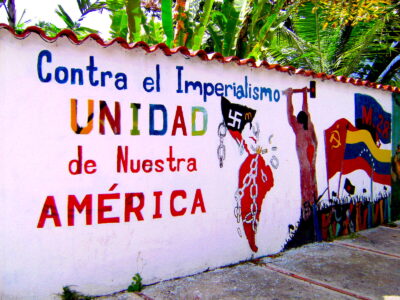
We must seek Latin American unity in justice and in freedom. The existence of the CELAC (Community of Latin American and Caribbean States)—or any other integration mechanism, for that matter—has proved not to be a sure guarantee of a united Latin America in the face of threats from the north, not only because several of its member governments are themselves the expression of the far right’s global rise but because the interests of Latin America’s bourgeosies are highly dependent on u.s. imperialism.
The true unity of Nuestra América, its real and definitive independence, will come hand in hand with the revolution.
Cuba is no threat to the united states or its people. Cuba, to be sure, is a danger for the u.s. ruling class, but not because she possesses drones or missiles that can hit it or because of the intelligence work she has been forced to undertake in order to defend herself, but because of the danger that her example represents.
That is why they have worked so hard to make Cuba fail. Though the specter of communism is today roaming with unusual vigor from one end of the northern nation to the other—much to the terror of Trump, Rubio, and the Epstein-class billionaires—it is not thanks to the efforts of this little island, a besieged victim of genocide, but to the very conditions of exhausted capitalism, in crisis and unable to guarantee a dignified existence for millions of people. Making Cuba fail is not only a historic obsession of imperialism and the Cuban-american lobby but a vital domestic need for the u.s. establishment, something it can use as an ideological argument to contain popular discontent and the ongoing discrediting of capitalism and its institutions. They must demonstrate in practice the failure of socialism in order to delegitimize it. The fact that this failure is forced upon it—through the total suffocation of its economy, through a knee on its neck that prevents it from breathing—rather than occurring naturally, is a minor detail to them. What matters is being able to portray socialism as a failed, inefficient system, incapable of generating wealth and prosperity, and whose only outcome after 60 years is misery, trash in the streets, and long blackouts. That a country with very limited resources like Cuba can, under socialism, perform the miracle of providing education, housing, health care, culture, scientific development, and quality of life for all, under equal conditions—something that even the most powerful form of capitalism cannot even dream of—is an unbearably subversive example that they cannot allow to exist just 90 miles off their coast.
Cuba is not fomenting communism in the united states; it is the u.s. working class’s own standard of living that points to the possibility of communism as a better society with dignity and justice for all. Cuba only supplies the powerful example of what a people can do once they are freed from the chains of capitalism.
What really bothers the hegemonic power and explains its savagery toward Cuba is this island has experimented with a way of life that has proven to be far more just, humane, and dignified than life in other parts of the world—a way of life that guarantees equality, health, education, and housing for all under a socialist model of a planned national economy. Cuba’s very existence, ninety miles from the united states, is a dangerous example that the empire wants to destroy at any cost so that it will not spread to the rest of Latin America and the world. The mere fact that the blockade exists is palpable proof of the superiority of the Cuban example: if socialism were so inefficient, the united states could lift the blockade and let the Revolution fail on its own.
The Cuban Revolution does not belong to the Cuban people alone: it belongs to all the revolutionaries and all the peoples of the world.
The Cuban Revolution is a symbol of resistance and hope for all the world’s oppressed, the palpable demonstration that the utopia of a better society is possible; that it is possible to establish new kinds of relations between human beings, with well-being for all; that it is possible to successfully challenge imperialism and powerful dominant forces. The defeat of the Cuban Revolution would mean not only an enormous setback in the standard of life of Cuban workers and the loss of our national sovereignty but also a terrible setback for all people’s causes and popular struggles at the international level. The defense of the Revolution is, therefore, an inescapable duty of exploited people and rebels across the world. And now more than ever, its fate depends on the outcome of the international class struggle. The survival and ultimate triumph of the Cuban socialist project are ultimately determined by the spread of the world socialist revolution. The best way to show solidarity with it is to set in motion, in different countries, revolutionary processes aimed at overcoming capitalism.
- Professor of the History of the Cuban Revolution in the History Department at the Universidad del Oriente (Santiago de Cuba)
- Cuba’s defense doctrine.
- The Lineamientos de la Política Económica y Social [Social and Economic Policy Guidelines], adopted by the VII Party Congress in 2011 and updated in 2016 and 2011, serve as the basis for economic reform in the country.